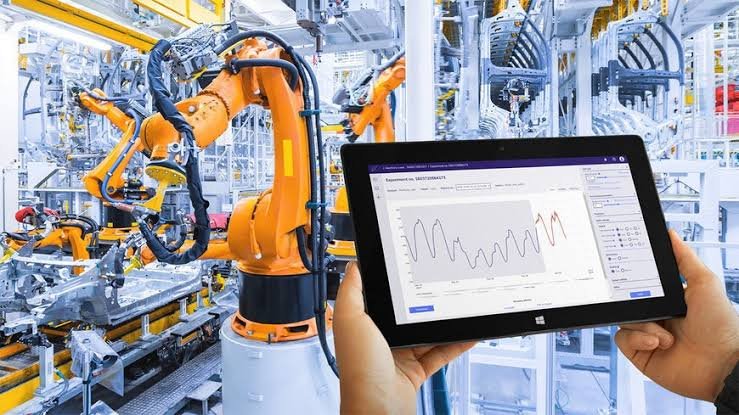

Artificial intelligence detects equipment problems by continuously monitoring sensor data and identifying subtle deviations from normal operation. It relies on labeled data, feature extraction, and anomaly detection to reveal early risks. Models translate complex signals into actionable alerts, supporting proactive maintenance and reduced downtime. In deployment, governance, drift monitoring, and safe rollback ensure reliability. The approach emphasizes repeatable data collection and responsible licensing, leaving a core question unresolved: how will these systems adapt to evolving conditions and unseen faults?
What AI-Driven Diagnostics Do for Equipment Health
AI-driven diagnostics continuously monitor equipment behavior to identify subtle deviations from normal operation that precede failures.
The approach emphasizes data labeling to ensure representative inputs and robust feature extraction, enabling early risk recognition.
Transparent model governance enforces accountability, documentation, and periodic audits.
This methodical practice supports preventive maintenance, fosters reliability, and aligns operational choices with safety, performance, and freedom from unexpected downtime.
The Core Techniques: ML, Anomaly Detection, and Predictive Maintenance
The core techniques—machine learning, anomaly detection, and predictive maintenance—form an integrated framework for monitoring equipment health. This framework emphasizes data-driven insight, systematic verification, and proactive planning. Predictive maintenance emerges from pattern recognition and trend analysis, guiding timely interventions before failures. Anomaly detection isolates deviations, enabling rapid risk assessment. Together, these methods support autonomous diagnostics while preserving operational freedom and reliability.
How Models Turn Sensor Data Into Actionable Alerts
Sensor data are processed by models to generate timely, interpretable alerts that translate complex patterns into actionable signals. The approach emphasizes disciplined data labeling to train robust detectors and transparent thresholds for reliability. Outputs feed disciplined decision cycles, guiding maintenance without overreaction.
Model deployment focuses on reproducibility, monitoring drift, and safe rollback, ensuring alerts remain accurate, timely, and usable for operators.
Real-World Deployment: From Data Collection to Downtime Reduction
In real-world deployments, data collection workflows are structured to capture high-quality, representative sensor streams while minimizing gaps and bias that could impair downstream analytics. The approach emphasizes governance and disciplined change control, ensuring data governance and licensing standards support transparent provenance. By aligning collection with operational goals, downtime reduction follows from calibrated models, validated pipelines, and responsible data licensing practices enabling repeatable, preventive maintenance outcomes.
Frequently Asked Questions
How Do AI Models Handle Sensor Data Gaps or Outages?
AI models address sensor data gaps through imputation, redundancy, and uncertainty-aware forecasting, enhancing model resilience. They assess data quality, deploy fallback strategies, and quantify confidence, enabling preventive insights while maintaining analytical, methodical transparency for audiences seeking freedom.
What Are the Costs of Implementing Ai-Based Health Monitoring?
The costs of implementing AI-based health monitoring vary, with cost benchmarks guiding budgeting; ROI considerations depend on downtime reductions and maintenance savings. Data governance, vendors comparison, and scalable architectures influence total investment and long-term value.
Can AI Predict Faults Before Sensors Fail or Drift Occurs?
Can AI predict faults before sensor drift or failures manifest, enabling proactive safeguards? It analyzes trends for predictive maintenance, assesses drift, and flags anomalies with methodical rigor, offering analytical, preventive insights that appeal to an audience seeking freedom.
How Is Data Privacy Protected in Industrial AI Systems?
Data privacy is protected through strict access controls, data minimization, and encryption across industrial AI systems, ensuring industrial security. The approach is analytical, preventive, and methodical, presenting a framework that respects user autonomy and promotes transparent governance.
Do AI Alerts Cause Alert Fatigue Among Operators?
AI alerts can contribute to alert fatigue, altering operator perception by diminishing trust and responsiveness; a preventive, methodical approach is needed, including prioritization, contextualization, adjustable thresholds, and continuous feedback to sustain alert usefulness for autonomous, freedom-seeking teams.
See also: How Artificial Intelligence Helps Detect Financial Fraud
Conclusion
Artificial intelligence, with its steady gaze at streams of sensor data, performs the ritual of prognostication with clinical detachment. It catalogs deviations, labels risks, and issues alerts as if diagnosing a patient who never complains. The result is a methodical ballet of anomaly detection, feature extraction, and governance, aimed at minimizing downtime and maximizing safety. In short, AI-enabled diagnostics translate noise into next-step maintenance, preserving uptime while impressing upon operators the inevitability of proactive upkeep.